
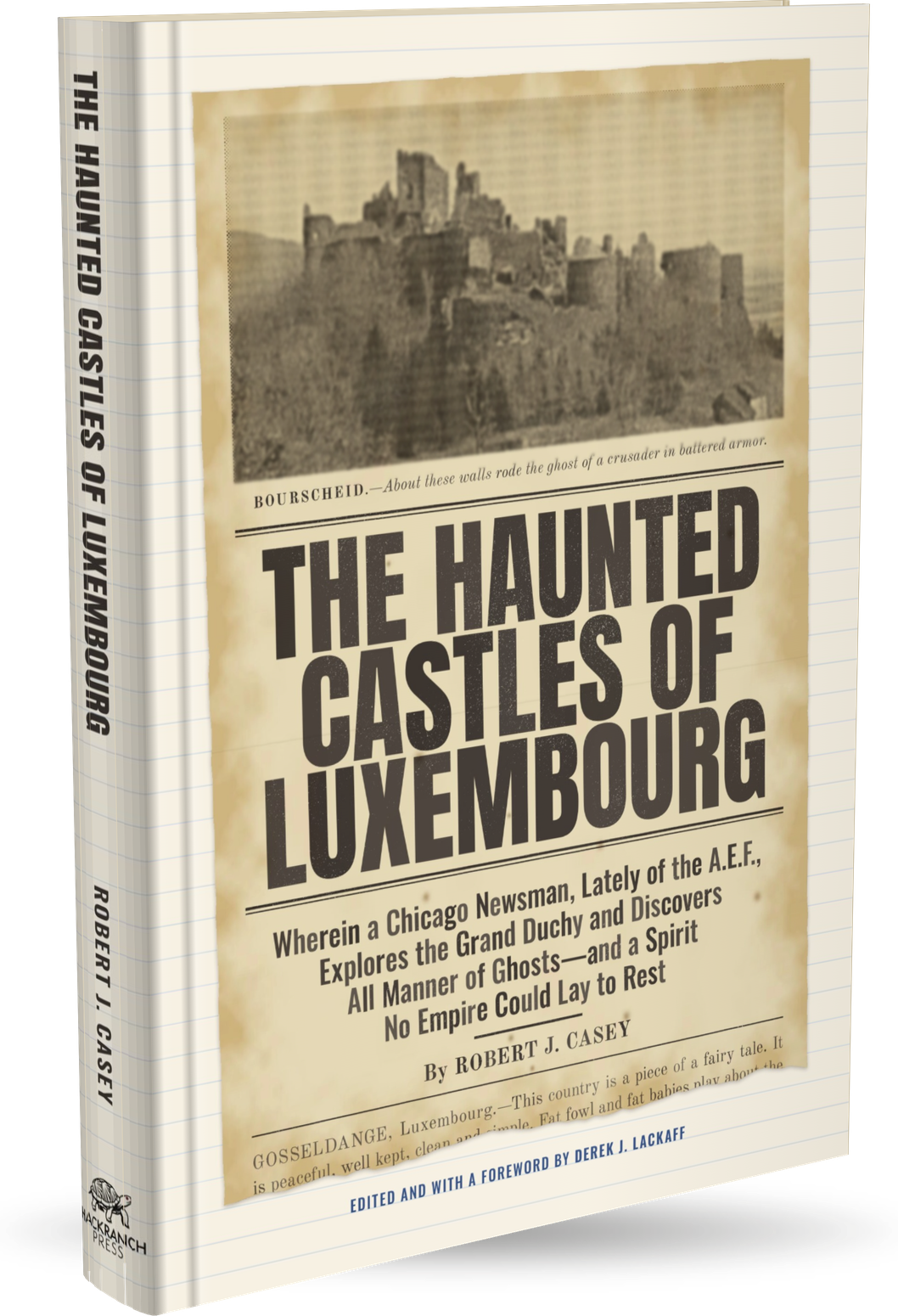
Coming 2027
The Haunted Castles of Luxembourg
Wherein a Chicago Newsman, Lately of the A.E.F., Explores the Grand Duchy and Discovers All Manner of Ghosts—and a Spirit No Empire Could Lay to Rest
By Robert J. Casey
Edited and with a foreword by Derek J. Lackaff
Had the novelists designed this country to suit themselves,
they could have done no better.
In the winter of 1918, Captain Robert J. Casey, a Chicago newspaperman turned artillery officer, marched into the Grand Duchy with the American Army of Occupation. He found himself in a real-life fairy tale: a tiny country crowded with tragic history, political intrigue, quiet national pride and, above all, castles. Notebook in hand, he set out across the country to meet the Luxembourgers and learn their stories.
The result was America’s first popular introduction to Luxembourg, The Land of Haunted Castles (1921), an irreverent and not-entirely-factual tour of this “toy kingdom.” Casey introduces its founder, Count Siegfried, and his mermaid bride, Melusina; probes its war-torn past; marvels at the knightly shenanigans of John the Blind; and calls on the many specters that still roam its castles and grottoes.
This volume presents Casey’s 1921 text, lightly edited and newly arranged in four parts, and adds his other early-career writing about Luxembourg: three short stories and a previously unpublished 1929 radio script. Together they offer a rare view of a little-explored moment in Luxembourg and American history.
Featuring Casey’s original photographs, a map, and period illustrations by Wally Wallgren, George Mather Richards and F. A. Hamilton.
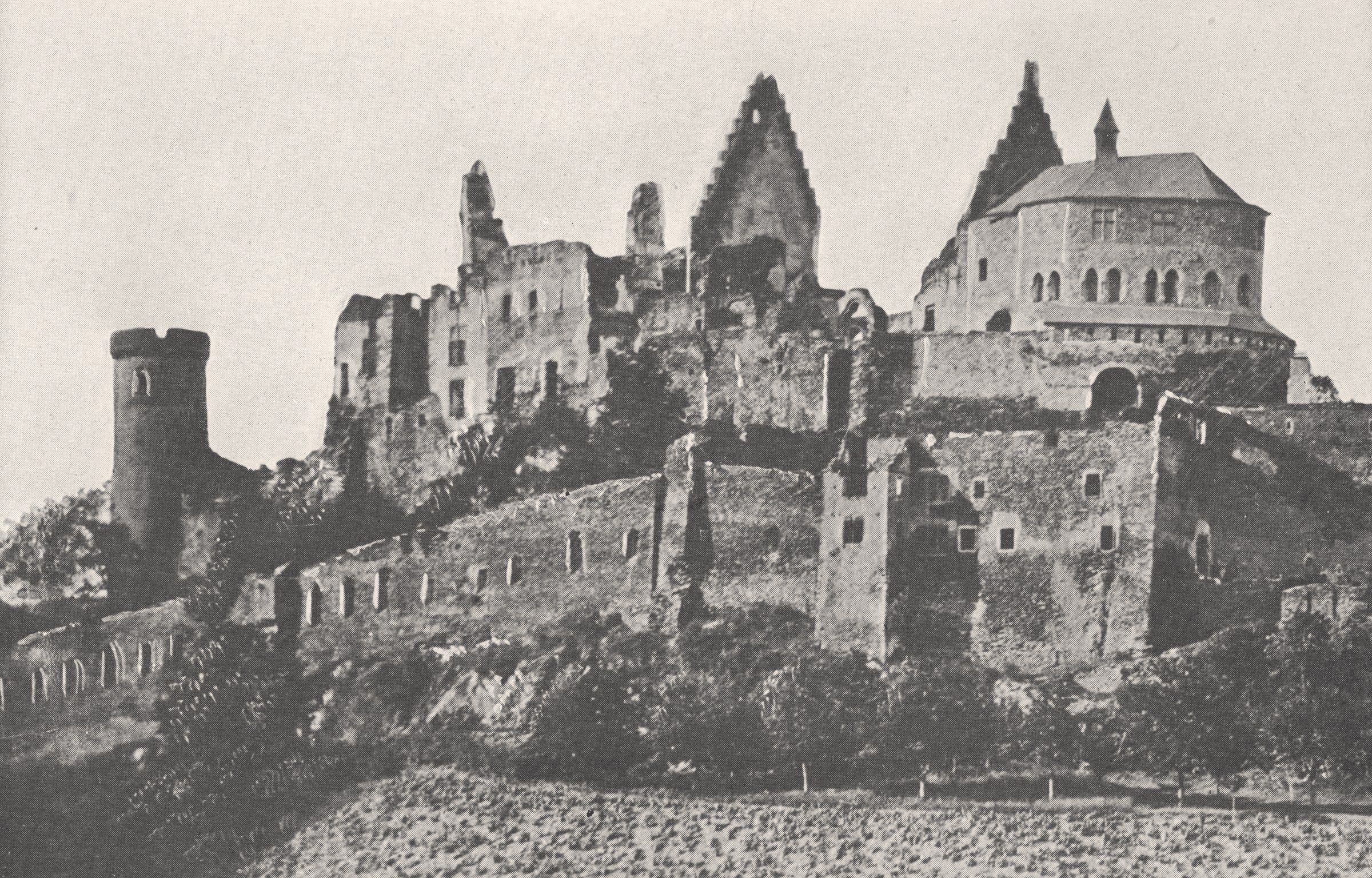
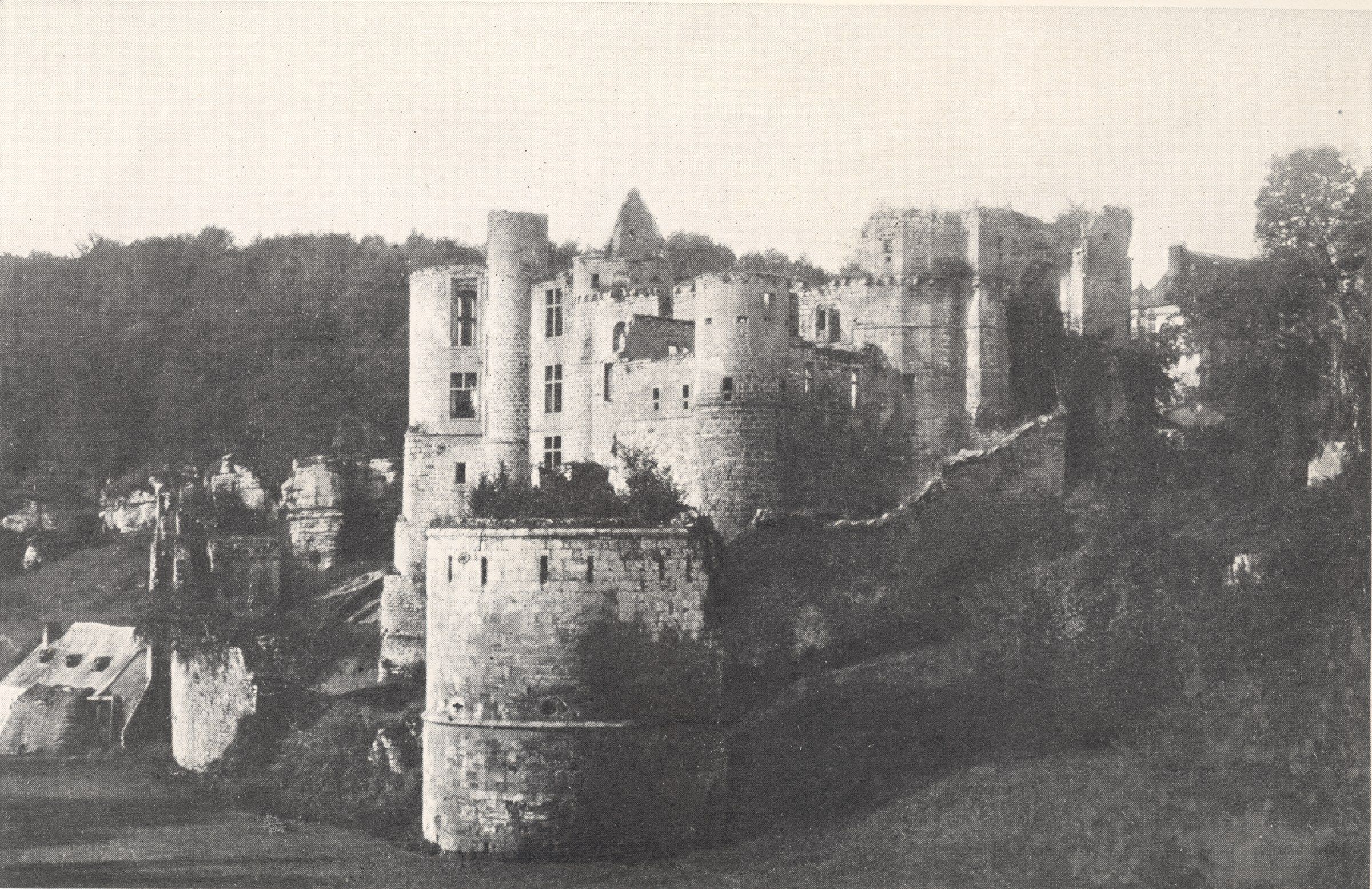
Post-war Luxembourg through American eyes
Alongside a lightly edited text of The Land of Haunted Castles (1921), this volume collects three short stories Casey wrote for the veterans’ magazine American Legion Weekly between 1919 and 1921: two farcical “accounts” of the American occupation and a Graustarkian mystery. It closes with the previously unpublished script of his 1929 radio broadcast for the Chicago Daily News station WMAQ, one of the few such scripts known to survive. New essays introduce each of the four parts and brief headnotes open each chapter, and Casey’s original typescript of the “Radio Photologue” is reproduced in facsimile.
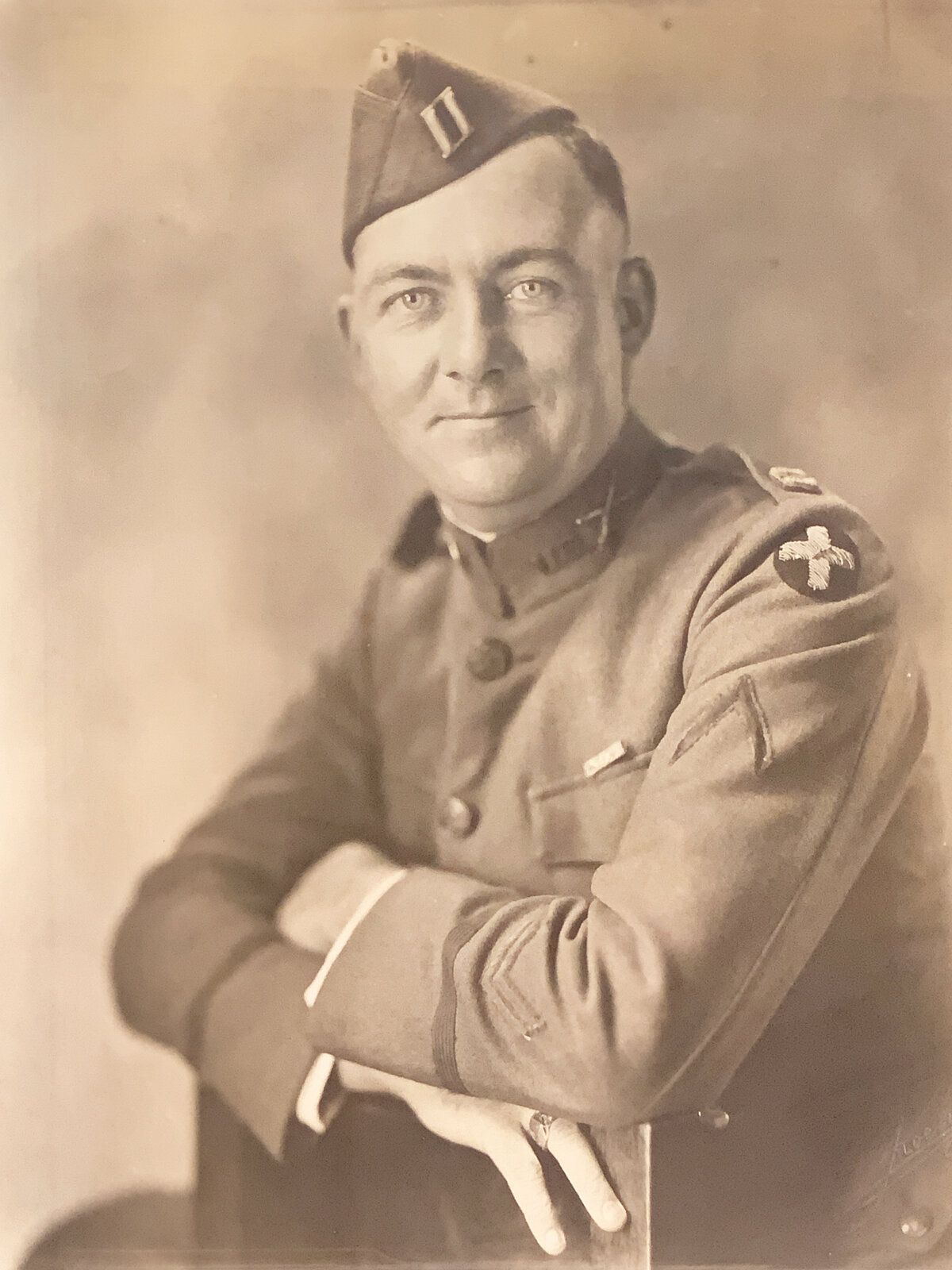
About the author
Robert Joseph Casey was born in Beresford, South Dakota, in 1890. He graduated in 1910 from St. Mary’s College in Kansas, where he discovered a knack for writing. He worked as a journalist in Des Moines, Houston, and Chicago before enlisting in the army at the outbreak of the Great War. By the time of the armistice, he had risen to the rank of captain in the 124th Field Artillery, won three citations for bravery under fire and the Silver Star Medal. After the war, he joined the Chicago Daily News, where he developed his reputation as a brilliant and witty reporter who punctured the swashbuckling legends of the Chicago gangland. He remained with the Daily News for the next twenty-seven years, and became one of America’s most famous war correspondents during the Second World War. In addition to his reportage, he wrote more than thirty books, including accounts of his adventures across Europe, the Middle East, and Southeast Asia, a series of whodunit crime novels, several eyewitness accounts of World War II in Europe and in the Pacific, and stories about his journalist colleagues. He died in Chicago in 1962.
About the editor
Derek J. Lackaff is a writer and academic based in North Carolina.
Book details
| Publisher | Hackranch Press |
|---|---|
| Category | History / Folklore |
| Format | Hardcover with dust jacket |
Price, page count and publication date will be announced.
Credits
Magazine illustrations: Abian A. “Wally” Wallgren, George Mather Richards, F. A. Hamilton
Author photos: Courtesy Newberry Library
Cover photo: Robert J. Casey
Book and jacket design: Derek J. Lackaff